Mold Removal in Talbot Hill, WA
Talbot Hill rises south of downtown Renton, between the Cedar River valley and the Green River valley, with Valley Medical Center at its southern end and I-405 cutting across its northern slope. Most of its houses are 1960s and 1970s ramblers and split-levels on the lower slopes, with 1980s and 1990s two-stories higher up toward Rolling Hills and a scatter of newer infill near the hospital.
A hillside plat means cut lots, and a cut lot means one wall of the house sits against soil that is saturated from November to April. The 1960s houses have their original windows and crawl spaces over bare dirt; the 1990s houses have tight envelopes and bath fans that end in the attic. Either way, growth tends to show up low on the uphill wall or high on a north-facing ceiling.
Call this line from Talbot Hill and you reach one independent local mold provider who works the hill. We make the connection and step aside.
Talbot Hill mold removal on cut lots
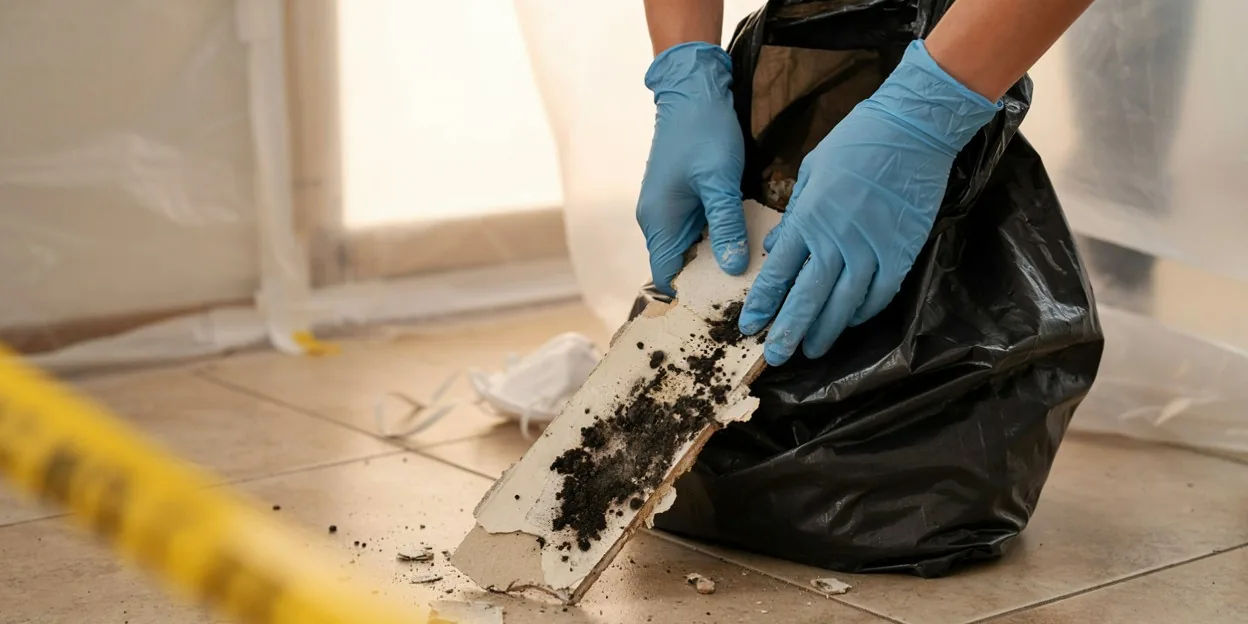
A gray band creeping up the drywall on the uphill side of a 1968 split-level is black mold removal. A soft window sill and a stained closet ceiling in a 1970s rambler is mold removal. Open studs and a missing baseboard after the removal crew finishes is mold damage repair.
The hospital at the top of the hill
Valley Medical Center on South 43rd Street anchors the south end of Talbot Hill; the current hospital opened in November 1969 as Valley General, descended from a public hospital district voters created in the 1940s, and much of the housing on the hill was built for the people who worked there.
Call (425) 584-6572 and tell us which wall is showing growth. We put you through to a local mold provider serving Talbot Hill.
Services Available in Talbot Hill
Mold Removal
Growth on drywall, a closet wall, or a window sill after nine wet months: room sealed, wet board cut to the meter line, framing HEPA-cleaned and dried.
Black Mold Removal
A dark patch handled by how far the moisture reached, not its color: containment, porous material out, hard surfaces cleaned, source fixed before closing.
Whole-Home Mold Remediation
A crawl space, a roof leak, and a bathroom all feeding growth in one house, mapped room by room and cleared in zones as one project.
HVAC Mold Cleaning
Furnace cabinet, coil, and the ducts that run through a damp crawl space cleaned when the heat comes on in October and the house smells wrong.
Bathroom Mold Removal
Spots on a bathroom ceiling with a weak fan, growth behind a vanity or under a shower pan, removed with the leak or the venting fixed first.
Attic Mold Remediation
Dark sheathing under a roof that drips condensation all winter, cleaned and treated once the bath fans vent outside and the soffits breathe.
Mold Odor Removal
A musty smell that climbs out of the crawl space every November, traced to the wet joists or insulation under the floor, then removed and treated.
Mold Damage Repair
Drywall, trim, subfloor, and insulation put back after removal, once the framing reads dry and whatever let the water in is repaired.