Black Mold Removal in Renton, WA
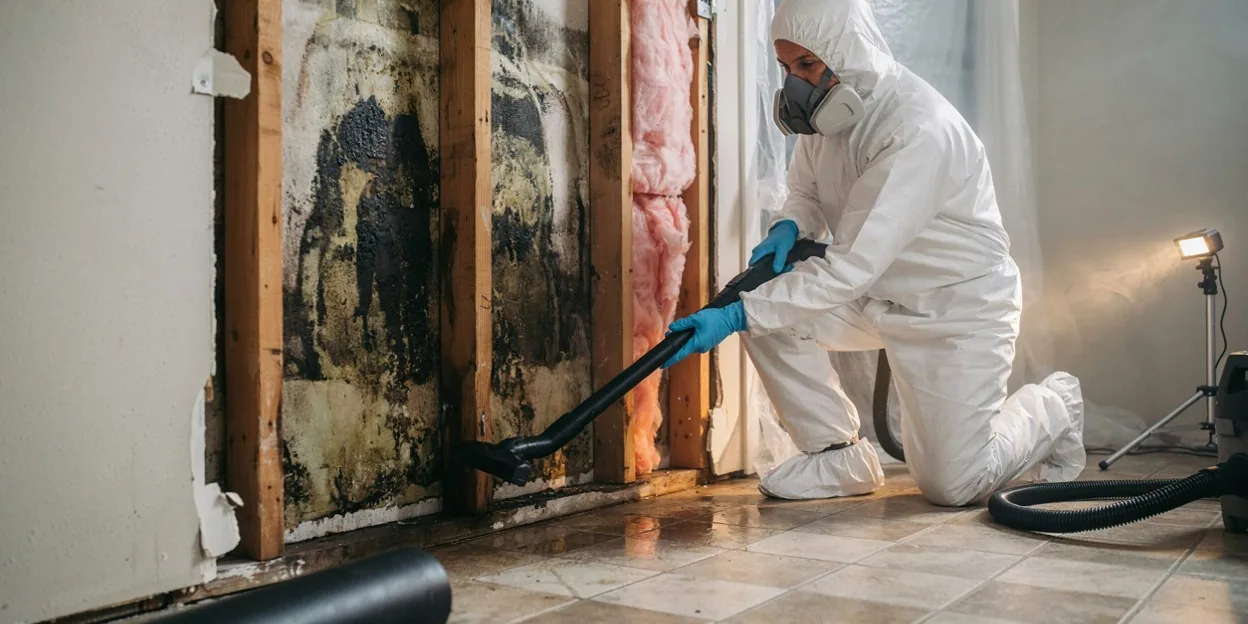
You moved the couch to vacuum and found it: a dark patch, nearly black, climbing eighteen inches up the living room wall from the baseboard. The wall backs onto the slope behind a 1990s two-story on Talbot Hill, and the carpet along that edge feels cool. You searched the color online and did not sleep well. This site connects you by phone with an independent local provider who does black mold removal in Renton and across King County.
The color gets a photo; the moisture gets the attention
The provider does not try to name the species, because the name would not change a single step. What they want to know is how a wall with no plumbing in it got wet. In a hillside house the usual answer is water moving through the soil against the foundation, wicking up the sill plate and into the bottom of the drywall, or a crawl space on that side of the house that has been damp since the first October rain.
A pin meter and a thermal camera map how far the wet goes: up the wall, along it behind the baseboard, and into the carpet pad. Containment follows that map. Plastic seals the living room from the hall and kitchen, the furnace return is taped, and a HEPA scrubber runs the room under negative air before anything is disturbed.
Leave the patch alone and look outside
Do not scrub it, spray it, or peel the baseboard back to see how bad it is. A dark patch on drywall is spread by disturbing it far more than by leaving it. Take photos, move the furniture a few feet away, and go outside. Look at where the downspouts on that side of the house end, whether the grade slopes toward the wall, and whether the foundation vents on that side sit in a puddle. Those answers help the crew more than the color does.
If anyone in the house has asthma or is pregnant, keep them out of that room until the plastic is up. That is a sensible precaution, not a diagnosis; we make no health claims about any patch of growth.
What leaves in bags and what gets cleaned in place
Drywall and baseboard come out to a set height above the highest wet reading, with the insulation behind them. Carpet and pad along that wall are cut back and bagged. The studs and bottom plate are HEPA vacuumed, wiped, and metered; wood that stays wet after cleaning is cut out and sistered. The crew seals the plastic and runs dehumidifiers until the sill plate and the framing read dry.
Then the source gets fixed or scheduled: a downspout extension, a regraded strip of yard, a footing drain, or a crawl-space cleanup under that wall. If the crawl space turns out to be wet across the whole footprint, the job becomes whole-home mold remediation. Dark growth on the bathroom ceiling is bathroom mold removal. The new drywall, baseboard, and carpet edge go in under mold damage repair.
Hillside plats, wet soil, and the Renton permit desk
Renton's 1990s and 2000s subdivisions on Talbot Hill, Benson Hill, Kennydale, and the East Plateau are cut into slopes, and the uphill wall of a house on a cut lot sits against soil that stays saturated from November to April. Water moves through that soil toward the foundation whether or not it ever shows up in the house. Older ramblers in the Highlands and Earlington have the same problem on a smaller scale, with gutters that were sized for a different century of rainfall.
Washington has no mold license, so the provider represents its own training; the drywall and framing work needs a Department of Labor and Industries contractor registration, and a rebuild that opens framing or wiring needs a City of Renton permit, or a King County permit outside the city line. Washington homeowner policies generally exclude groundwater and seepage, so photographs and the crew's moisture log are what your adjuster will ask for.
Calling about a dark patch on a Renton wall
Have the address, which wall the patch is on, and whether that wall faces a slope or a yard. Say how high the growth reaches, whether the carpet feels damp, and whether the house has a crawl space on that side. Call (425) 584-6572.