Mold Removal in Issaquah, WA
Issaquah sits in a valley between Cougar, Squak, and Tiger mountains, the three peaks locals call the Issaquah Alps, with Issaquah Creek running through a downtown that incorporated in 1892 around a railroad depot and a coal mine. The old town has 1900s through 1940s houses on small lots near the creek; the Issaquah Highlands, across I-90, added thousands of tightly built homes and townhouses in the 2000s and 2010s on a plateau that catches more rain than the valley floor.
The two halves have different mold problems. Downtown, it is a damp crawl space over creek-bottom soil and a bath fan that was added to a house built without one. On the Highlands, it is a tight envelope, a cold north-facing attic slope, and a townhouse where one unit's shower steam condenses on a shared wall.
Homeowners in Issaquah reach one independent local mold provider through this line. We connect the call; the provider meters the house and writes the scope.
Issaquah mold removal from the creek bottom to the Highlands
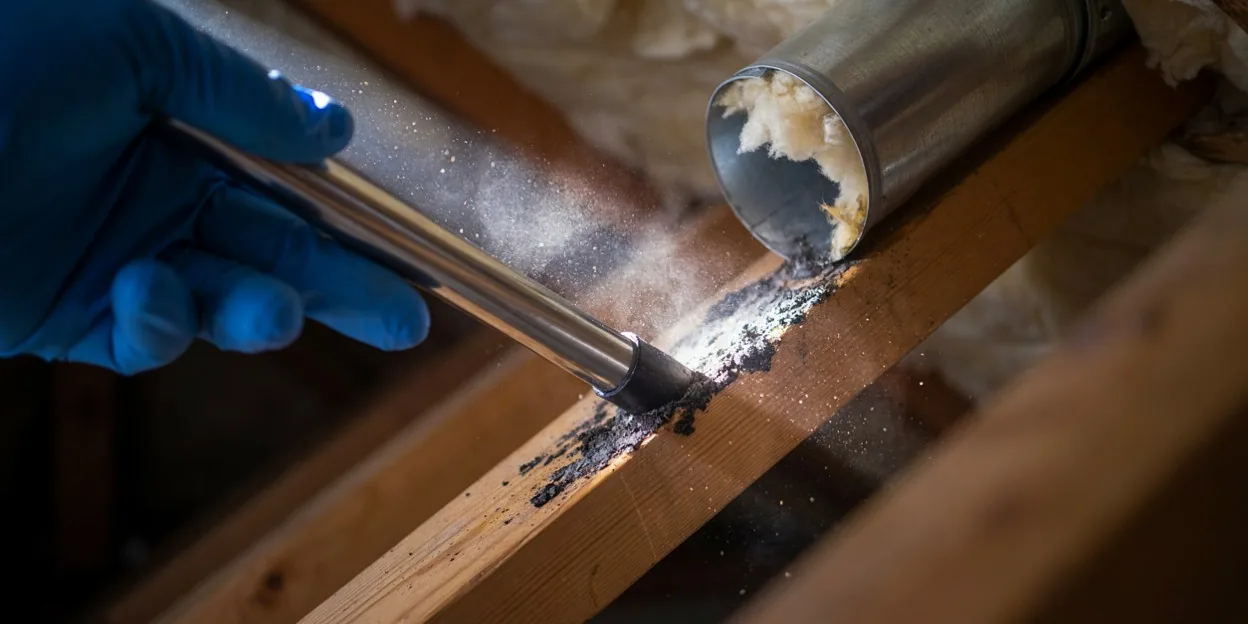
Dark plywood across the north slope of a 2008 Highlands attic, found by a buyer's inspector, is attic mold remediation. A soft window sill and gray closet ceiling in a 1930s house two blocks from the creek is mold removal. Spots on a windowless bathroom ceiling that return every January is bathroom mold removal.
A depot museum and a mountain full of old mine shafts
The Issaquah History Museums run the restored railroad depot downtown and the research center at the old Gilman Town Hall. West of town, Cougar Mountain Regional Wildland Park covers more than 3,000 acres of second-growth forest over the old coal workings, and the county asks hikers to stay on the trails because of what the mines left behind.
Call (425) 584-6572 and describe where the house is wet. We put you through to a local mold provider serving Issaquah.
Services Available in Issaquah
Mold Removal
Growth on drywall, a closet wall, or a window sill after nine wet months: room sealed, wet board cut to the meter line, framing HEPA-cleaned and dried.
Black Mold Removal
A dark patch handled by how far the moisture reached, not its color: containment, porous material out, hard surfaces cleaned, source fixed before closing.
Whole-Home Mold Remediation
A crawl space, a roof leak, and a bathroom all feeding growth in one house, mapped room by room and cleared in zones as one project.
HVAC Mold Cleaning
Furnace cabinet, coil, and the ducts that run through a damp crawl space cleaned when the heat comes on in October and the house smells wrong.
Bathroom Mold Removal
Spots on a bathroom ceiling with a weak fan, growth behind a vanity or under a shower pan, removed with the leak or the venting fixed first.
Attic Mold Remediation
Dark sheathing under a roof that drips condensation all winter, cleaned and treated once the bath fans vent outside and the soffits breathe.
Mold Odor Removal
A musty smell that climbs out of the crawl space every November, traced to the wet joists or insulation under the floor, then removed and treated.
Mold Damage Repair
Drywall, trim, subfloor, and insulation put back after removal, once the framing reads dry and whatever let the water in is repaired.