Mold Odor Removal in Renton, WA
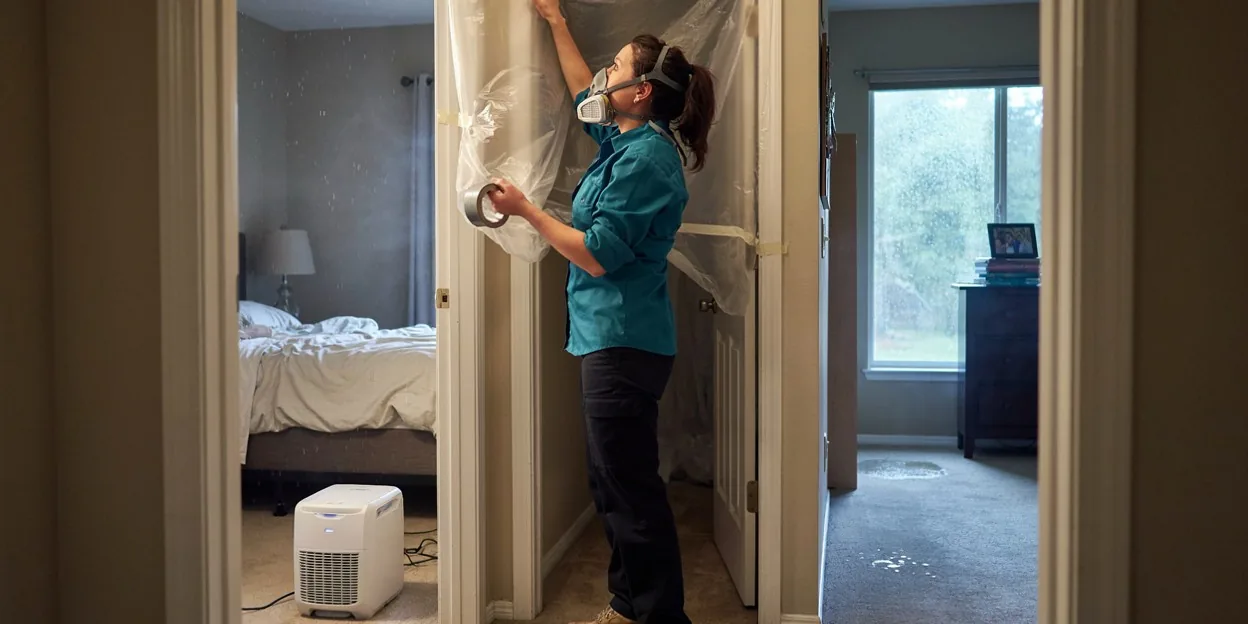
Nothing in the house looks wrong. No stains, no soft drywall, no water anywhere you can see. But every fall, about a week after the rain sets in, the hallway starts to smell like a root cellar, and by Thanksgiving the smell has moved into the bedrooms. In summer it is gone and you forget about it. The house is a 1956 rambler in North Renton on a crawl space with a hatch in the hall closet you have opened twice. This site connects you by phone with an independent local provider who does mold odor removal in Renton and across King County.
The hall closet hatch is the first thing the crew opens
A smell that follows the calendar is a smell that follows the ground. The provider goes into the crawl space with a light and a meter and reads what is down there: bare soil or a vapor barrier, standing water in the low corner, insulation hanging from the joists, a dryer vent or a bath fan duct that ends under the floor. The air from that space moves up through the gaps around pipes, the furnace return, and the hatch itself every time the house is warmer than the ground.
Then they meter upstairs along the path the smell takes: the closet floor, the base of the hallway walls, and the floor under the bathroom and kitchen. Most of the time the upstairs reads dry and the whole problem is below. Sometimes the subfloor under a bathroom reads wet, and that is where the smell is sharpest.
Stop masking it and start keeping notes
Put the candles and plug-ins away for a week so you can tell where the smell actually lives. Note whether it is stronger in the morning, after rain, or when the furnace has been running. Open the hall closet and the crawl-space hatch and smell; if the smell down there is the smell upstairs, you have found it. Look for water in the low corner and photograph it with a flashlight.
Do not pull the insulation down yourself and do not spray anything through the hatch. If the crawl space has standing water, that is a pump and drainage job first, and it should happen before the mold crew comes.
Wet material out from below, then the air treated from above
Inside containment, with the hatch sealed and a scrubber exhausting through a foundation vent, the wet insulation and any waterlogged vapor barrier come out in bags. The joists, girders, and subfloor are HEPA vacuumed, cleaned, and metered, and the crew runs dehumidifiers under the house until the wood reads dry. The gaps around pipes and the furnace return are sealed so the crawl space stops being part of the house's air supply.
Only then does the odor treatment happen: a HEPA scrubber upstairs for a few days and a treatment that breaks down the odor compounds rather than covering them. A deodorizer sprayed over wet joists buys a week. A furnace that ran crawl-space air all winter is HVAC mold cleaning. A wet subfloor under the bathroom points to bathroom mold removal. New insulation and a new vapor barrier go in under mold damage repair.
Bare soil, Boeing-era ramblers, and the furnace that pulls from below
The 1940s and 1950s houses in North Renton, the Highlands, and Earlington were built for Boeing and PACCAR families on vented crawl spaces over bare dirt, and many still have no vapor barrier at all. From October to May that soil is wet, the air under the floor is near saturation, and a furnace return in the hallway is the strongest fan in the house pulling it upward. That is why the smell arrives with the rain and leaves with the sun.
Washington has no mold license; the provider represents its own training. Replacing insulation and vapor barrier is contractor work under a Department of Labor and Industries registration, and any subfloor replacement or drainage work may need a City of Renton permit, or a King County permit for Skyway, Fairwood, and the East Plateau. A smell traced to humidity and groundwater is rarely an insurance matter, so the photographs are mostly for you and for a future buyer.
Calling about a smell with no stain to point at in Renton
Have the address, the age of the house, and when the smell is worst. Say whether you have looked in the crawl space, whether there is water or bare soil down there, and whether the smell changes when the furnace runs. Call (425) 584-6572.