Mold Removal in Liberty Ridge, WA
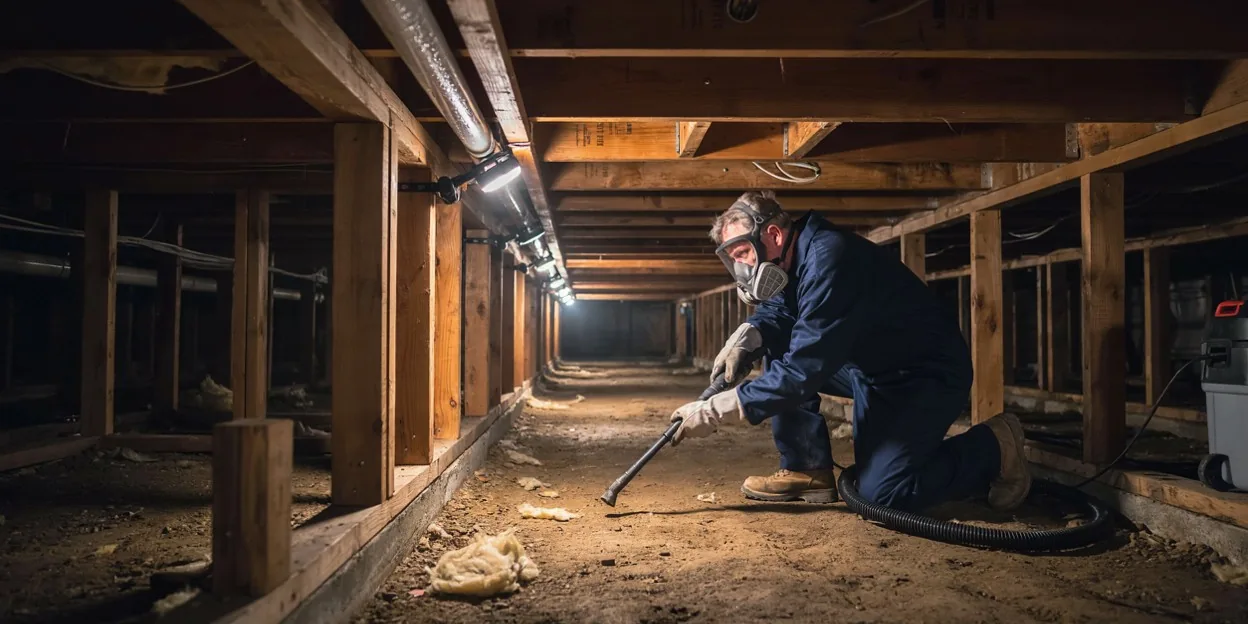
Liberty Ridge is one of the newest neighborhoods in Renton, a planned community of two-story houses built in the late 1990s and 2000s on the ridge between the Highlands and the Cedar River valley, with its own park, a dense street grid, and small lots that put houses a few feet apart. It is tight, well insulated, and built to a modern code, which changes the mold problem rather than removing it.
A tight house holds the moisture its occupants make. Four people showering, cooking, and breathing in a well-sealed house put gallons of water into the air every day, and if the bath fans end at the soffit or the range hood recirculates, that water condenses on the coldest surfaces it can find: the north attic slope, the window frames, and the back of a closet against an exterior wall. The crawl spaces, cut into clay on the ridge, hold the winter rain like the rest of the city's.
Liberty Ridge homeowners who call this line reach one independent local mold provider who works the ridge. We connect the call; the provider meters the house.
Liberty Ridge mold removal in tight new houses
Dark sheathing on the north attic slope of a 2003 two-story with four bath fans is attic mold remediation. Gray spots across a windowless bathroom ceiling in a house that is not yet twenty-five years old is bathroom mold removal. A closet against an exterior wall that smells musty and reads wet at the base is mold removal.
Why a house built to code still grows mold on the ridge
Modern code tightened the envelope and added fans, but a fan duct that came loose in the attic insulation during year one has been exhaling shower steam onto the roof deck ever since; the crew traces every duct to daylight before anything is cleaned. Rebuild permits go through the City of Renton, and the provider files them.
Call (425) 584-6572 and describe where the growth is showing. We put you through to a local mold provider serving Liberty Ridge.
Services Available in Liberty Ridge
Mold Removal
Growth on drywall, a closet wall, or a window sill after nine wet months: room sealed, wet board cut to the meter line, framing HEPA-cleaned and dried.
Black Mold Removal
A dark patch handled by how far the moisture reached, not its color: containment, porous material out, hard surfaces cleaned, source fixed before closing.
Whole-Home Mold Remediation
A crawl space, a roof leak, and a bathroom all feeding growth in one house, mapped room by room and cleared in zones as one project.
HVAC Mold Cleaning
Furnace cabinet, coil, and the ducts that run through a damp crawl space cleaned when the heat comes on in October and the house smells wrong.
Bathroom Mold Removal
Spots on a bathroom ceiling with a weak fan, growth behind a vanity or under a shower pan, removed with the leak or the venting fixed first.
Attic Mold Remediation
Dark sheathing under a roof that drips condensation all winter, cleaned and treated once the bath fans vent outside and the soffits breathe.
Mold Odor Removal
A musty smell that climbs out of the crawl space every November, traced to the wet joists or insulation under the floor, then removed and treated.
Mold Damage Repair
Drywall, trim, subfloor, and insulation put back after removal, once the framing reads dry and whatever let the water in is repaired.