Mold Removal in Downtown Renton, WA
Downtown Renton is the original town: a plat filed in 1875 at the point where the Cedar River reaches the lake, incorporated as a city in 1901 with about a thousand people, and built up with brick storefronts along Third Street and small houses on the surrounding blocks through the 1920s and 1930s. The river runs right through it on its way to Lake Washington, and in 1911 the failure of a dam at Landsburg sent a flood down that channel that reshaped how the city thought about the river.
The houses closest to downtown are the oldest in the city, many on crawl spaces or shallow basements a few feet above the river's water table, with plaster walls, original wood windows, and bathrooms carved out of closets decades after the house was built. Apartments and condominiums from the 2000s fill the blocks nearer the Landing, and they have their own problems with tight envelopes and shared walls.
Homeowners near downtown who call this line reach one independent local mold provider who works the old blocks. We connect the call; the provider meters the house.
Downtown Renton mold removal in the oldest houses in the city
A shallow basement that smells like the river every winter is mold odor removal. Stained plaster and a soft window sill in a 1920s house is mold removal. A bathroom carved out of a closet with no fan and a ceiling that spots every January is bathroom mold removal.
Forty-five thousand artifacts on South Third Street
The Renton Historical Society keeps more than 45,000 artifacts at its museum on South 3rd Street, two blocks from the river, including its record of the floods that have come down the river through these same streets.
Call (425) 584-6572 and describe where the house is wet. We put you through to a local mold provider serving Downtown Renton.
Services Available in Downtown Renton
Mold Removal
Growth on drywall, a closet wall, or a window sill after nine wet months: room sealed, wet board cut to the meter line, framing HEPA-cleaned and dried.
Black Mold Removal
A dark patch handled by how far the moisture reached, not its color: containment, porous material out, hard surfaces cleaned, source fixed before closing.
Whole-Home Mold Remediation
A crawl space, a roof leak, and a bathroom all feeding growth in one house, mapped room by room and cleared in zones as one project.
HVAC Mold Cleaning
Furnace cabinet, coil, and the ducts that run through a damp crawl space cleaned when the heat comes on in October and the house smells wrong.
Bathroom Mold Removal
Spots on a bathroom ceiling with a weak fan, growth behind a vanity or under a shower pan, removed with the leak or the venting fixed first.
Attic Mold Remediation
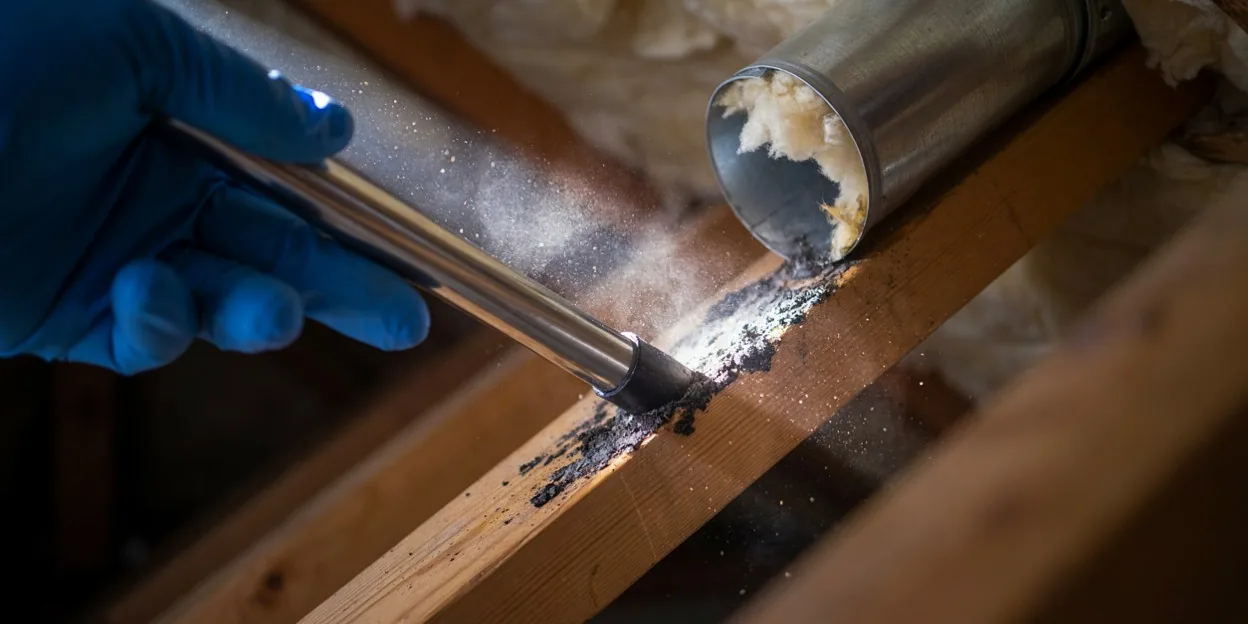
Dark sheathing under a roof that drips condensation all winter, cleaned and treated once the bath fans vent outside and the soffits breathe.
Mold Odor Removal
A musty smell that climbs out of the crawl space every November, traced to the wet joists or insulation under the floor, then removed and treated.
Mold Damage Repair
Drywall, trim, subfloor, and insulation put back after removal, once the framing reads dry and whatever let the water in is repaired.